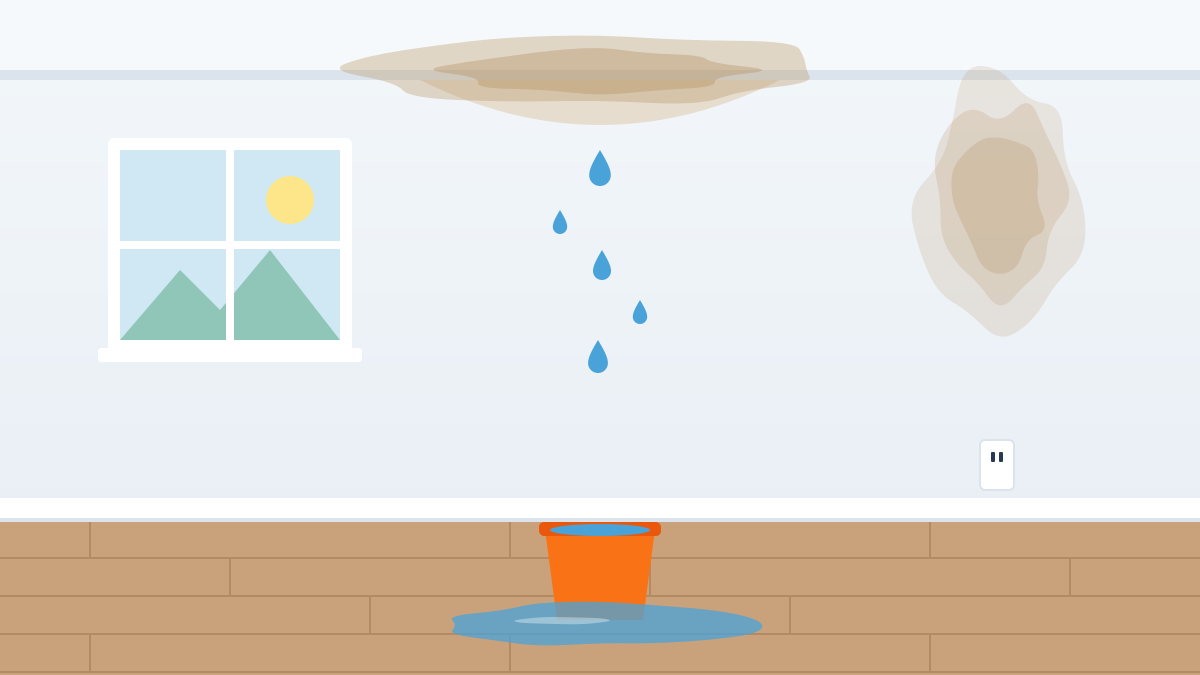
Common causes
- Roof leaks during winter storms
- Upstairs bathroom leaks — toilet seals, shower pans, tub drains
- Leaks from the unit above in apartments and condos
- Clogged AC condensate lines or drain pans in the attic
- Water heater or plumbing lines in the attic
Warning signs
- Brown or yellow rings on the ceiling
- Bubbling or peeling paint
- Sagging or soft drywall
- Dripping from light fixtures or vents
What professional ceiling water damage typically involves
- 1
Finding the source
Moisture meters and thermal imaging help trace where the water is coming from and how far it spread above the ceiling.
- 2
Controlled removal
Sagging or saturated drywall and wet insulation are usually removed in a controlled way to release trapped water safely.
- 3
Drying the cavity
The joist space above is dried with air movement and dehumidification.
- 4
Repair
Once the source is fixed and everything is dry, the ceiling is patched or replaced and repainted.
Immediate safety guidance
- Stay out from under a sagging ceiling — it can come down suddenly.
- Turn off power to light fixtures if water is coming through them.
- Put a bucket under drips and move furniture and electronics away.
- Don't poke a bulging ceiling yourself unless you can do it safely from outside the fall zone.
What does it cost?
Small, quickly caught stains may only need drying and paint. Larger wet areas usually require removing drywall and insulation, drying, and rebuilding. Fixing the source — roofing or plumbing — is typically a separate cost.
These are general estimates, not quotes. Pricing is set by the independent provider you work with.
Insurance considerations
Coverage often depends on the source. Sudden plumbing failures are commonly covered; roof leaks from wear and tear may not be. In multi-unit buildings, the upstairs owner's or HOA's policy may be involved.
Read more in our water damage insurance guide, or look up unfamiliar terms in the restoration glossary.
Availability in Los Angeles
We connect customers in Los Angeles with independent providers. When you request help we check whether a provider covers your ZIP code for this service. If no one is available, we'll tell you — we won't imply someone is on the way.