Common causes
- Aging copper lines wearing through where they touch concrete or gravel
- Corrosion from water chemistry or soil conditions
- Pipes shifting with soil movement or minor earthquakes
- Poor installation or kinked lines from original construction
- Hot-water lines expanding and contracting over decades
Warning signs
- A warm or hot spot on the floor
- The sound of running water when everything is off
- Water meter moving with all fixtures turned off
- Unexplained jump in your water bill
- Damp carpet, cupping hardwood or loose tiles with no visible leak
What professional slab leak water damage typically involves
- 1
Leak detection
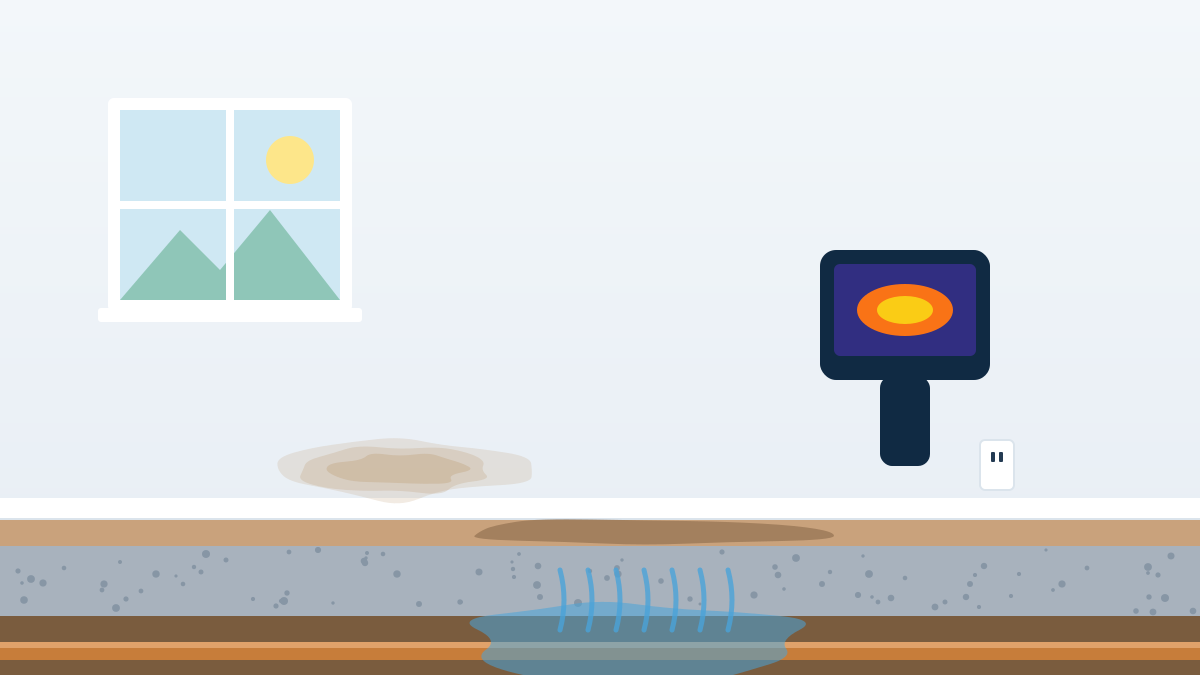
A leak detection specialist or plumber uses pressure testing, acoustic listening and sometimes thermal imaging to find where the line is leaking under the slab.
- 2
Repair or reroute
The plumber either opens the slab to repair the pipe directly, or abandons the leaking line and reroutes a new one through the walls or attic. The right option depends on the home and the condition of the rest of the plumbing.
- 3
Removing wet materials and drying
Flooring, baseboards and padding over the affected area are often removed so the slab and lower walls can be dried with dehumidifiers and air movers, with moisture readings until they reach drying goals.
- 4
Restoring finishes
Once everything is dry, flooring and trim are replaced. This may be done by the restoration provider or a separate licensed contractor.
Immediate safety guidance
- If you suspect a slab leak, shut off the water at the main and call a plumber.
- Keep note of your water meter reading and any changes — it helps with diagnosis and insurance.
- Take photos of affected flooring before anything is removed.
- Watch for mold or musty odors if flooring has been wet for a while.
What does it cost?
Slab leak costs usually have two parts: the plumbing repair (detection plus a spot repair or reroute) and the water damage restoration. The restoration side depends on how far the water spread and how long it went unnoticed. Only a provider who inspects the property can give you an actual estimate.
These are general estimates, not quotes. Pricing is set by the independent provider you work with.
Insurance considerations
Some homeowner policies cover the resulting water damage and the cost to access the pipe (tearing out and replacing the floor), but not the pipe repair itself. Coverage varies widely by policy, so read yours and contact your insurer early. We can't tell you whether your claim will be covered.
Read more in our water damage insurance guide, or look up unfamiliar terms in the restoration glossary.
Availability in Los Angeles
We connect customers in Los Angeles with independent providers. When you request help we check whether a provider covers your ZIP code for this service. If no one is available, we'll tell you — we won't imply someone is on the way.