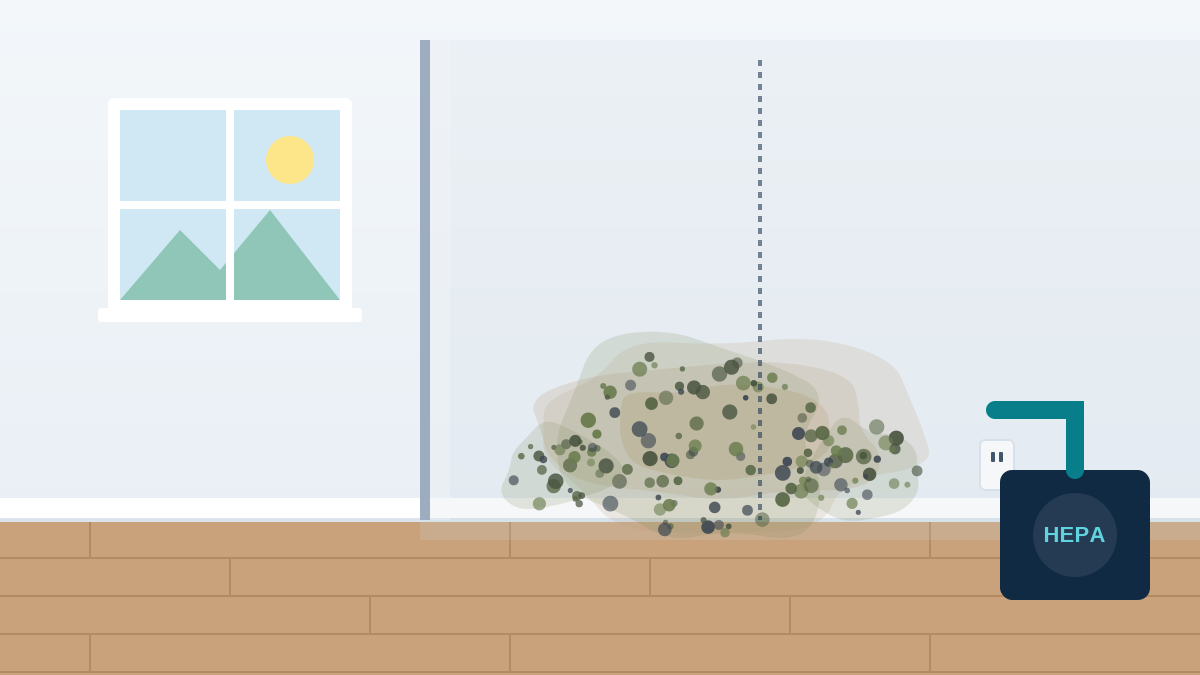
Common causes
- Slow leaks behind walls or under sinks
- Water damage that wasn't fully dried
- Roof leaks reaching attic insulation
- Poor ventilation in bathrooms and closets
Warning signs
- Visible spotting — black, green, white or gray
- Musty, earthy odor
- Peeling paint or discoloration near water sources
- Recurring condensation on windows or walls
What professional mold remediation typically involves
- 1
Assessment
The provider inspects the affected area, identifies the moisture source and estimates the extent of growth. In some cases an independent assessment or testing is recommended.
- 2
Containment
Plastic barriers and negative air pressure help keep spores from spreading to unaffected areas during removal.
- 3
Removal and cleaning
Contaminated porous materials such as drywall and insulation are removed. Non-porous surfaces are cleaned, and HEPA filtration is used to capture airborne spores.
- 4
Fixing the moisture source
Remediation won't last unless the leak or humidity problem is corrected.
Immediate safety guidance
- Don't disturb large areas of mold yourself — scraping or dry-brushing can spread spores.
- Don't run HVAC systems if you suspect mold is in the ductwork.
- People with asthma, allergies or weakened immune systems should avoid affected areas.
- Consult a medical professional about any health concerns.
What does it cost?
Small, contained areas cost much less than remediation involving multiple rooms, attics or HVAC systems. Containment, material removal and post-remediation verification all affect the price. Ask the provider what's included.
These are general estimates, not quotes. Pricing is set by the independent provider you work with.
Insurance considerations
Coverage for mold is often limited or excluded unless it results from a covered sudden water loss. Policies vary, so check yours.
Read more in our water damage insurance guide, or look up unfamiliar terms in the restoration glossary.
Availability in Los Angeles
We connect customers in Los Angeles with independent providers. When you request help we check whether a provider covers your ZIP code for this service. If no one is available, we'll tell you — we won't imply someone is on the way.