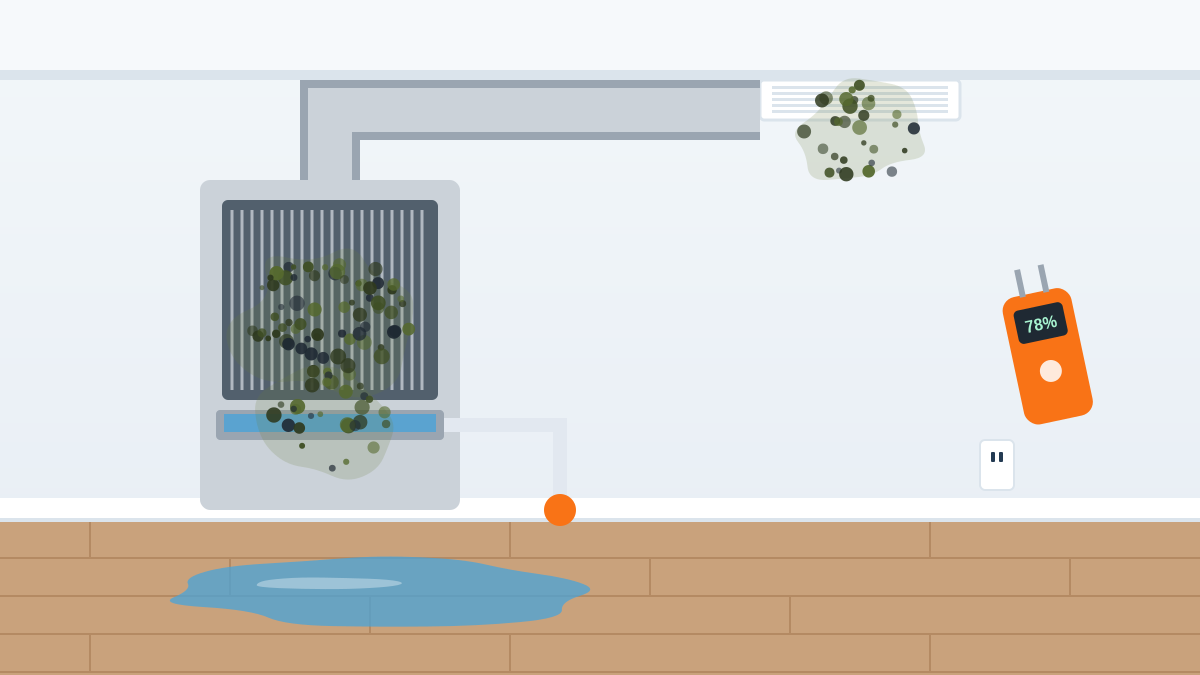
Common causes
- Clogged condensate drain lines or overflowing drain pans
- Condensation on uninsulated ducts in hot attics
- Dirty coils and filters holding moisture
- Oversized AC units that don't run long enough to dehumidify
- Water damage near returns or duct runs
Warning signs
- Musty smell when the AC or heat turns on
- Dark spotting around supply vents or return grilles
- Water around the air handler or drain pan
- Allergy symptoms that get worse when the system runs
What professional hvac & air duct mold typically involves
- 1
System inspection
The provider inspects the air handler, coils, drain pan, condensate line and accessible ductwork, sometimes with a camera.
- 2
Cleaning components
Coils, blower and drain pan are cleaned and the condensate line cleared. Cleaning is done under negative pressure so debris doesn't blow into the house.
- 3
Ductwork
Metal ducts can often be cleaned. Flex duct or duct board with mold growth is commonly replaced rather than cleaned.
- 4
Preventing recurrence
Fixing drainage, insulating ducts, and addressing any moisture source in the home keeps mold from coming back. Some providers recommend post-cleaning verification.
Immediate safety guidance
- Turn the system off if you see mold around vents or the air handler.
- Don't spray household cleaners into ducts or onto coils.
- Replace or don't run a filter that's visibly moldy.
- Consult a medical professional about any health concerns.
What does it cost?
Pricing depends on the number of duct runs, the type of ductwork, whether ducts need replacing, and how much of the air handler is affected. Ask the provider what's included and whether HVAC repairs are quoted separately.
These are general estimates, not quotes. Pricing is set by the independent provider you work with.
Insurance considerations
Mold in an HVAC system from ongoing condensation or maintenance issues is commonly excluded. Mold that follows a covered sudden water loss may be treated differently. Check your policy.
Read more in our water damage insurance guide, or look up unfamiliar terms in the restoration glossary.
Availability in Los Angeles
We connect customers in Los Angeles with independent providers. When you request help we check whether a provider covers your ZIP code for this service. If no one is available, we'll tell you — we won't imply someone is on the way.