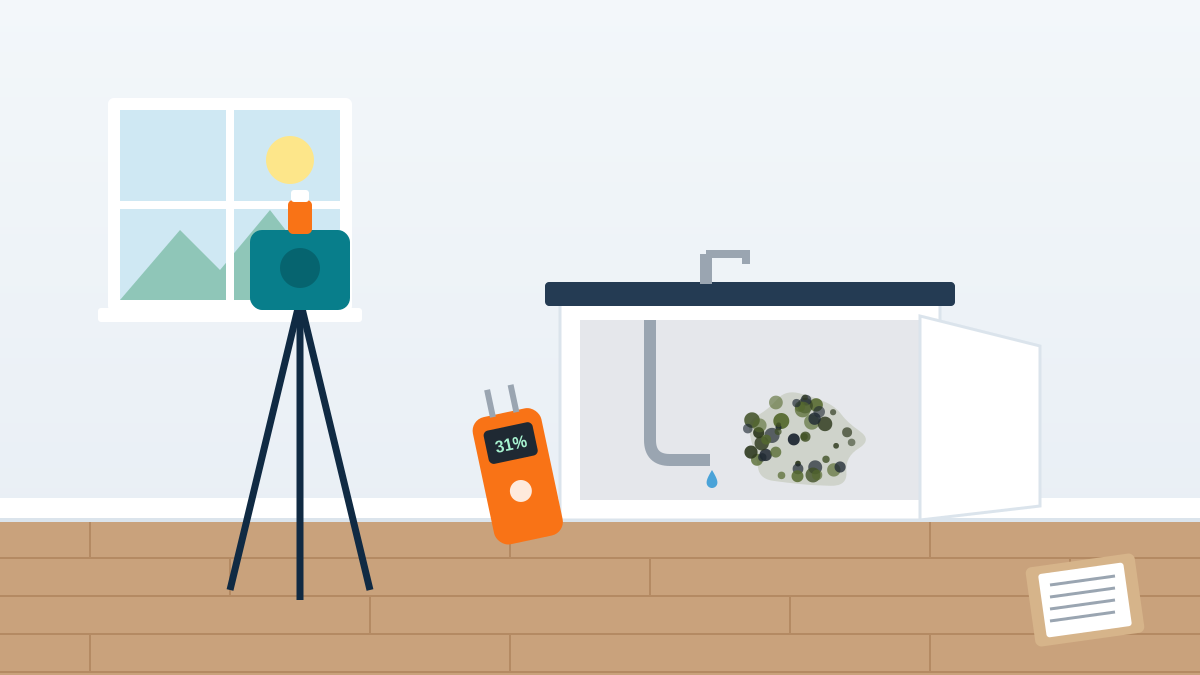
Common causes
- A past leak or water damage that may not have fully dried
- Ongoing humidity or condensation problems
- Buying, selling or renting a property and wanting to know its condition
- Confirming an area is clean after remediation
- Health concerns where mold is suspected but not visible
Warning signs
- Persistent musty or earthy odor
- Stains or discoloration that keep coming back
- Warped or bubbling drywall near a past leak
- Visible growth in one area that may extend further
What professional mold inspection & testing typically involves
- 1
Visual inspection
The inspector looks for visible growth and conditions that support it — leaks, stains, condensation and poor ventilation — throughout the property.
- 2
Moisture readings
Moisture meters and thermal imaging help find damp areas inside walls, floors and ceilings where mold may be growing out of sight.
- 3
Sampling
When appropriate, air or surface samples are taken and sent to a laboratory. Results compare indoor and outdoor spore levels or identify what's growing on a surface.
- 4
Report
You receive findings and recommendations. Many people prefer an inspector who is independent of the company that would do the remediation.
Immediate safety guidance
- Don't open walls or disturb suspected mold before an inspection — it can spread spores.
- Avoid running fans that blow across suspected mold.
- Keep people with asthma, allergies or weakened immune systems away from affected areas.
- Consult a medical professional about any health concerns.
What does it cost?
Pricing usually depends on the size of the property, the number of samples, and laboratory fees. A visual inspection alone generally costs less than one with multiple air or surface samples. Ask the provider what's included before booking.
These are general estimates, not quotes. Pricing is set by the independent provider you work with.
Insurance considerations
Inspection and testing are often paid out of pocket, though they may be included when mold results from a covered sudden water loss. Policies vary, so check yours.
Read more in our water damage insurance guide, or look up unfamiliar terms in the restoration glossary.
Availability in Los Angeles
We connect customers in Los Angeles with independent providers. When you request help we check whether a provider covers your ZIP code for this service. If no one is available, we'll tell you — we won't imply someone is on the way.