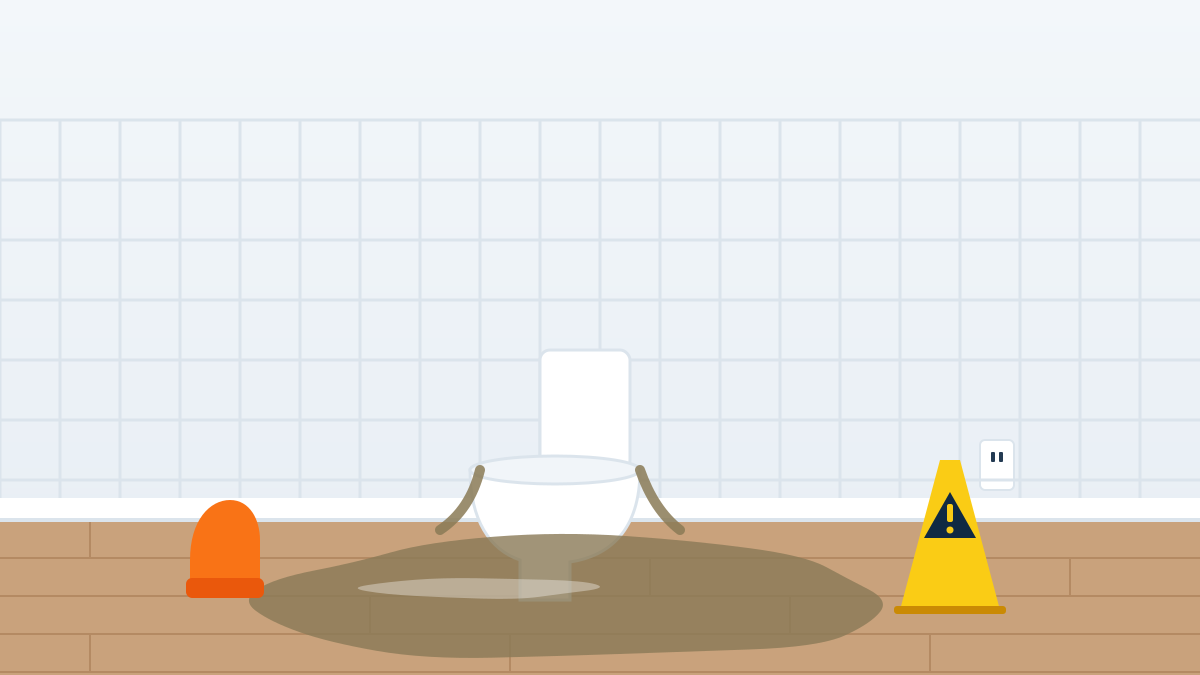
Common causes
- Main sewer line clogs from roots or grease
- Collapsed or cracked older clay or cast-iron sewer lines
- Toilet overflows with waste
- Municipal sewer surcharges during heavy storms
Warning signs
- Water coming up through floor drains, tubs or toilets
- Gurgling drains or multiple slow drains at once
- Sewage odor indoors
What professional sewage cleanup typically involves
- 1
Protection and containment
Technicians use protective equipment and may isolate the affected area to avoid spreading contamination.
- 2
Removal
Sewage is extracted and porous materials it contacted — carpet, pad, lower drywall, insulation — are typically removed and disposed of.
- 3
Cleaning and sanitizing
Remaining surfaces are cleaned and treated with appropriate antimicrobial products.
- 4
Drying and verification
The structure is dried and monitored before rebuild.
Immediate safety guidance
- Avoid contact with sewage; keep children and pets away.
- Stop using water and toilets in the home until the line is cleared.
- Don't use fans or HVAC to blow air through contaminated areas.
- Wash thoroughly if you've had contact, and seek medical advice if you feel unwell.
What does it cost?
Sewage cleanup usually costs more than clean-water damage because of protective measures, material removal and disposal. Clearing or repairing the sewer line is a separate plumbing cost.
These are general estimates, not quotes. Pricing is set by the independent provider you work with.
Insurance considerations
Sewer backup is often excluded from standard homeowner policies unless you have a specific sewer or water backup endorsement. Check your policy.
Read more in our water damage insurance guide, or look up unfamiliar terms in the restoration glossary.
Availability in Los Angeles
We connect customers in Los Angeles with independent providers. When you request help we check whether a provider covers your ZIP code for this service. If no one is available, we'll tell you — we won't imply someone is on the way.