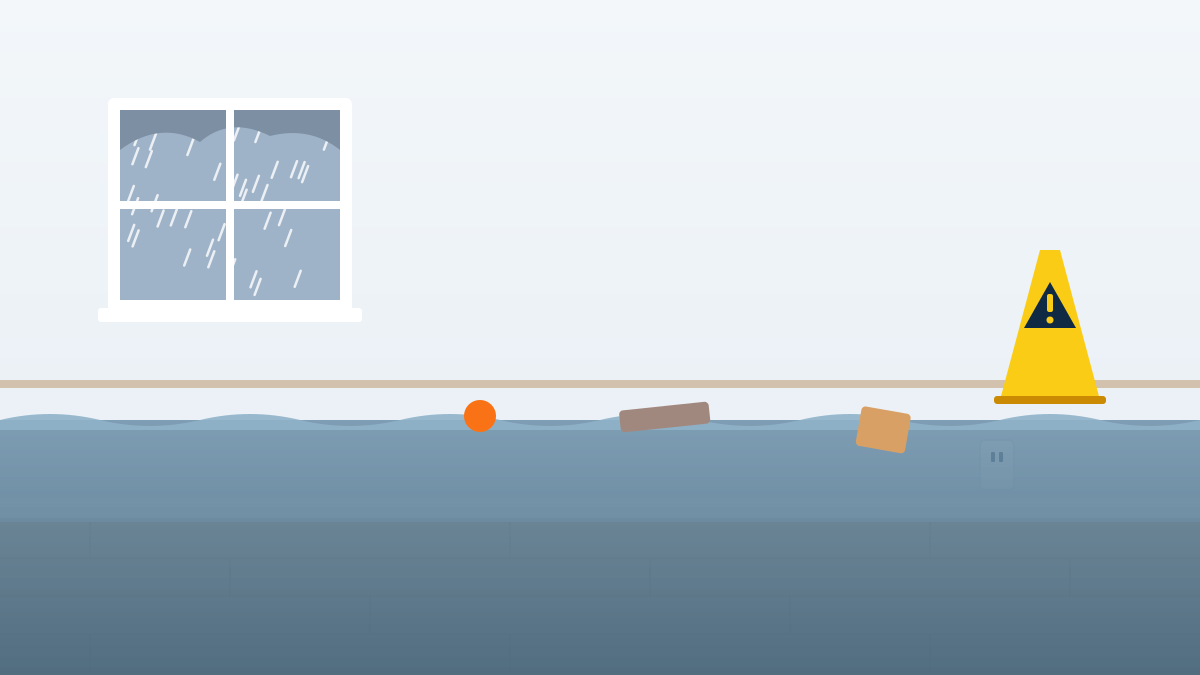
Common causes
- Heavy rain and storm runoff
- Hillside mudflow, especially after wildfires
- Clogged or overwhelmed drainage
- Low-lying garages and basements
Warning signs
- Water or mud entering through doors, garages or crawlspaces
- Water lines on walls after water recedes
- Strong odors after a storm
What professional flood cleanup typically involves
- 1
Safety and contamination assessment
Flood water typically contains soil, bacteria and chemicals. Providers use protective equipment and assess which materials need to be removed.
- 2
Water and debris removal
Water, mud and debris are removed. Porous materials that contacted flood water — carpet, pad, lower drywall, insulation — are commonly discarded.
- 3
Cleaning and sanitizing
Remaining surfaces are cleaned and treated before drying begins.
- 4
Drying and rebuild
Structural drying follows, then repairs once materials are confirmed dry.
Immediate safety guidance
- Do not return to a flooded property until authorities say it's safe.
- Avoid contact with flood water — wear boots and gloves if you must enter.
- Have the gas and electrical systems checked before turning them back on.
- Throw out food, medicine and cosmetics that touched flood water.
What does it cost?
Flood cleanup usually costs more per square foot than clean-water damage because of contamination, material removal and disposal. A provider assessment is needed for a real estimate.
These are general estimates, not quotes. Pricing is set by the independent provider you work with.
Insurance considerations
Standard homeowner policies usually exclude flooding from outside. Flood coverage typically comes from a separate flood policy, such as through the NFIP. Check what policies you have.
Read more in our water damage insurance guide, or look up unfamiliar terms in the restoration glossary.
Availability in Los Angeles
We connect customers in Los Angeles with independent providers. When you request help we check whether a provider covers your ZIP code for this service. If no one is available, we'll tell you — we won't imply someone is on the way.