Common causes
- Burst pipe or failed supply line
- Water heater rupture
- Overflowing toilet, tub or sink
- Storm water entering through doors or a low-lying area
- Fire sprinkler discharge
Warning signs
- Visible standing water
- Carpet that squishes underfoot
- Water spreading under baseboards into other rooms
- Water dripping through a ceiling from the floor above
What professional emergency water removal typically involves
- 1
Stopping the source
If the leak is still active, it needs to be stopped first — sometimes with a plumber's help.
- 2
Extraction
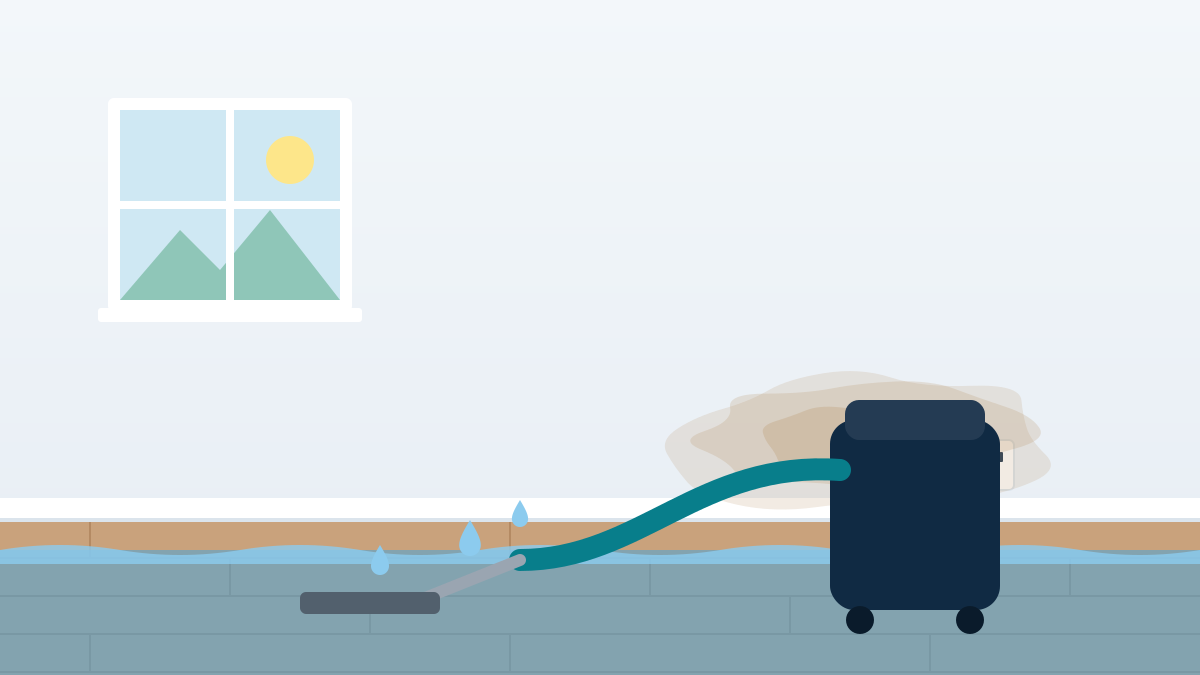
Providers use submersible pumps for deep water and extraction wands or weighted extractors for carpet and pad.
- 3
Assessment for drying
Once bulk water is gone, the provider measures moisture to plan structural drying.
Immediate safety guidance
- Don't enter rooms where water may be in contact with electrical outlets, cords or panels.
- If water came from a toilet or sewer line, avoid contact — it may be contaminated.
- Move valuables, documents and electronics out of the affected area if it's safe.
- Don't use a household vacuum to remove water.
What does it cost?
Emergency extraction is typically priced as part of a larger water damage job and depends on the volume of water, affected area and after-hours timing. Ask the provider how they price emergency service before work begins.
These are general estimates, not quotes. Pricing is set by the independent provider you work with.
Insurance considerations
If your policy covers the loss, emergency mitigation to prevent further damage is often expected by insurers. Document everything and notify your insurer promptly.
Read more in our water damage insurance guide, or look up unfamiliar terms in the restoration glossary.
Availability in Los Angeles
We connect customers in Los Angeles with independent providers. When you request help we check whether a provider covers your ZIP code for this service. If no one is available, we'll tell you — we won't imply someone is on the way.